
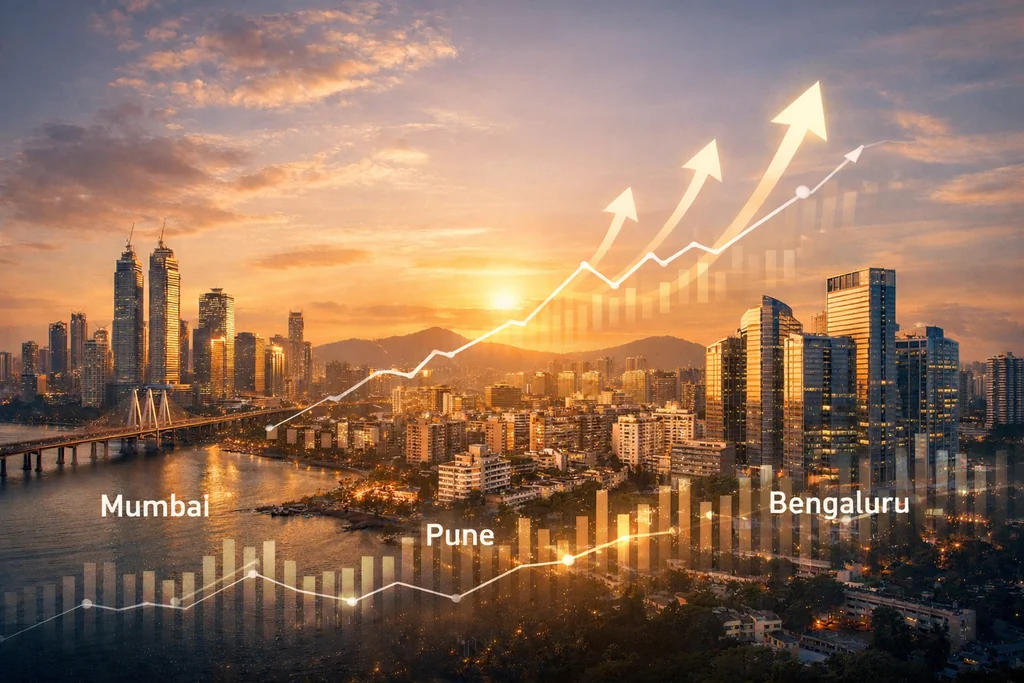
India’s Real Estate Market Is Splitting in Two: Premium Property Rises While Affordable Housing Slows
India’s residential real estate market is entering a new phase in 2026: overall sales are moderating, but premium and luxury housing continues to outperform. For investors, the message is clear — the market is no longer about buying property; it is about buying the right segment, location and product.
India’s Real Estate Market Is Splitting in Two
The Indian real estate market is showing an important structural shift in 2026.
Housing sales are moderating — but property prices and premium housing demand remain resilient.
According to recent Q2 2026 data, housing sales across India's top seven cities declined around 6% year-on-year to approximately 90,715 units, while average residential prices increased by around 7%.
At the same time, CBRE reported that Q2 sales across its tracked markets remained above 61,000 units, with the share of high-end apartments continuing to increase.
The result?
India isn't experiencing a simple real estate slowdown. It is experiencing a real estate reconfiguration.
The Biggest Trend: Premiumisation
The strongest signal in the current market is premiumisation.
Buyers with stronger purchasing power are increasingly moving toward:
Premium apartments Luxury residences Larger homes Better-connected locations Lifestyle-driven developments High-quality commercial assets Grade-A office spaces
Meanwhile, affordability pressure is making the lower end of the residential market more sensitive to interest rates, construction costs and household purchasing power.
Recent market analysis shows the high-end residential segment significantly outperforming affordable housing, with homes in the ₹1–3 crore bracket accounting for a larger share of Q2 2026 sales.
Why Are Prices Still Rising When Sales Are Slowing?
This is where investors need to look beyond headline sales numbers.
Developers are becoming more disciplined about new supply, while land, construction and financing costs remain elevated.
That creates a situation where:
Lower transaction volume ≠ lower property prices.
Instead, the market is increasingly rewarding:
Scarcity + Location + Product Quality + Buyer Profile
This is particularly relevant for premium micro-markets where high-income buyers are less sensitive to short-term affordability pressures.
Commercial Real Estate Tells a Different Story
The residential market isn't the entire real estate story.
India's commercial real estate market continues to demonstrate strong structural demand.
India's office market recorded approximately 21.4 million sq. ft. of gross leasing across the top eight cities in Q2 2026, according to Cushman & Wakefield.
The growth is being supported by:
Global Capability Centres Corporate expansion Technology companies Financial services Business services Demand for Grade-A offices Better-connected commercial locations
This creates an important investment divergence:
Residential is becoming increasingly selective. Commercial is becoming increasingly strategic.
What Does This Mean for Surat?
For Surat investors, the important takeaway isn't simply that "property prices are rising."
The real question is:
Which segment of Surat's real estate market is positioned to capture the next wave of economic activity?
Surat's investment story is increasingly connected to business expansion, infrastructure, premium residential demand and industrial/logistics activity.
Recent market coverage continues to identify Surat as an emerging real estate growth market, while current property-rate trackers show continued price movement across the city.
That makes micro-market selection increasingly important.
For example, investors should evaluate:
Residential → end-user demand + rental potential + infrastructure
Commercial → tenant profile + frontage + catchment + leasing demand
Industrial → connectivity + access + zoning + logistics demand
Warehousing → highway connectivity + industrial ecosystem + tenant covenant
Land → development potential + infrastructure + holding period
GIFT City / IFSC → institutional activity + corporate demand + long-term commercial ecosystem
The Investor's New Rule
The old approach was:
"Property prices will increase."
The smarter approach is:
"Which asset is likely to generate the best risk-adjusted return over my investment horizon?"
That means analysing:
Entry Price → Rental Yield → Capital Appreciation → Liquidity → Tenant/End-User Demand → Infrastructure → Exit Potential
A property that appreciates 8% but produces weak rental income may not necessarily outperform an asset generating a stronger combination of yield and appreciation.
VARDHMAAN REALTORS' Take
The Indian real estate market is not moving uniformly.
It is becoming more segmented, more data-driven and more investment-sensitive.
The next phase of wealth creation in real estate may not come from simply buying in a "hot area."
It will come from identifying the right asset class inside the right micro-market at the right entry point.
For investors in Surat and Gujarat, this makes professional market analysis increasingly important.
Don't ask only: "Will property prices rise?"
Ask:
"Which property has the strongest investment thesis?"
Market Signal: 🟢 Premium & luxury — Strong Residential mass market: 🟡 Selective Commercial: 🟢 Strong structural demand Industrial & logistics: 🟢 Opportunity-led Investor strategy: Selective, data-backed acquisition
Source basis: Current 2026 market data from CBRE, ANAROCK, Cushman & Wakefield and recent Indian real-estate reporting.
Want a view on your own portfolio or requirement?
Our advisors take one call at a time — no gatekeeping, no scripts.
Send an enquiry
Why Warehousing Could Be One of India’s Most Attractive Real Estate Investment Opportunities for the Next Decade
India’s warehousing sector is moving from fragmented storage facilities to a professionally managed, technology-enabled real estate asset class. With e-commerce, 3PL, manufacturing, quick commerce and supply-chain expansion driving demand, the opportunity is increasingly shifting toward Grade-A warehouses in strategic logistics corridors — offering investors the potential combination of rental income, escalation and long-term capital appreciation.
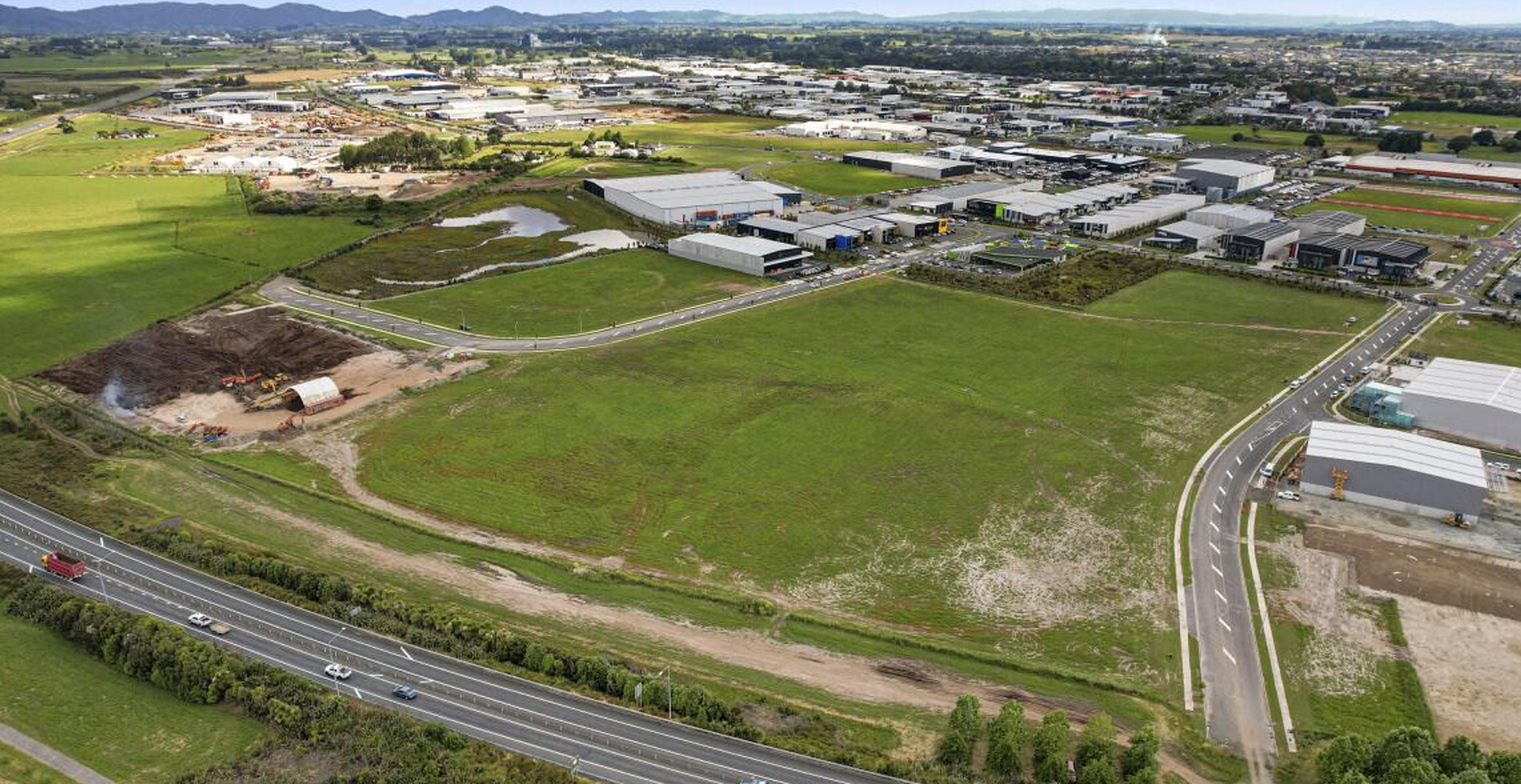
Surat's Commercial Real Estate In 2026: What Buyers Should Know
Vesu, Adajan and the Diamond Bourse corridor are reshaping how corporates lease Grade-A space in Surat.